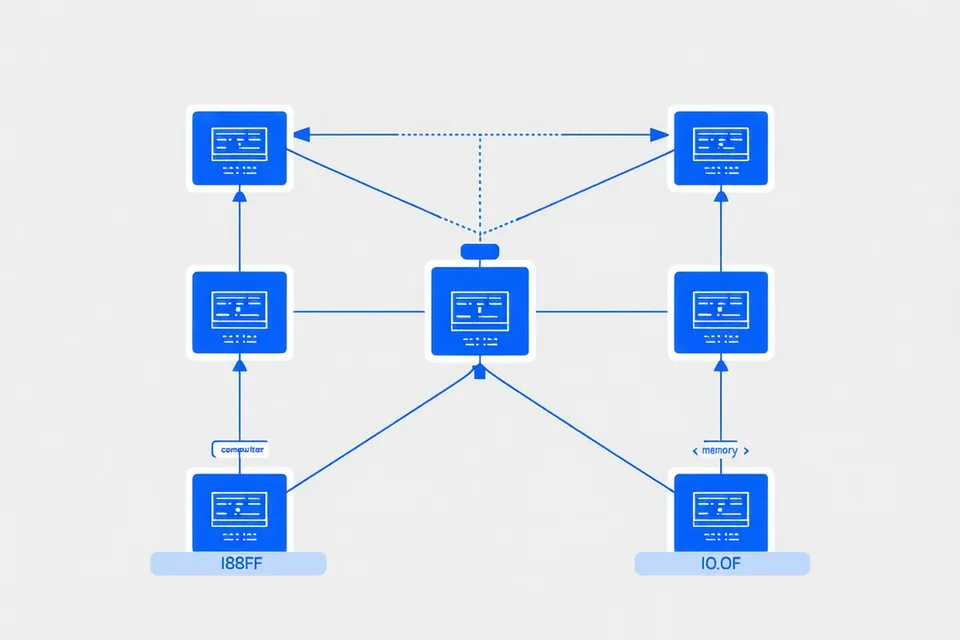
TILE is not a commercial compute board with a radiation spec sheet. It is designed from first principles for the TID environment of LEO: deterministic inference latency, hardware SEL protection, ECC-protected memory, and a power envelope that fits a standard CubeSat EPS budget.
Low Earth orbit is not a clean room. Total ionizing dose, single-event effects, displacement damage — every hardware decision at Sophia Space accounts for the orbital radiation environment.
TILE targets the specific inference workloads satellite operators actually need: multispectral change detection, object classification on optical imagery, AIS anomaly detection for IoT passes, sensor fusion across housekeeping data. These are bounded-scope problems — not general-purpose cloud compute. A ~50 GOPS INT8 inference engine, running deterministically, is the right tool for them. A full cloud node is not.
TILE follows the 1U CubeSat board form factor and connects via CAN bus, SpaceWire, UART, SPI, and I²C — the interface set your bus engineers already know. Models are compiled and loaded to TILE's flash during the satellite assembly, integration, and test (AIT) phase. No orbital procedures. No new ground segment infrastructure required at launch.
CAN bus, SpaceWire, UART, SPI, I²C — common satellite bus protocols natively supported. No custom interface hardware required.
1U board form factor. Designed for 6U CubeSat minimum bus allocation. SmallSat integration available via adapter bracket.
Operator models compiled via the TILE Toolchain and loaded to onboard flash during AIT. The toolchain converts ONNX or TFLite graphs to TILE binary format with INT8 quantization. Ground uplink for in-mission model updates is on the development roadmap — not yet available.